
Asthma in Children and Adults
 Asthma is one of the most common chronic conditions in Australia. Around 10% of Australian children aged 0-14 live with asthma (more common in boys), and around 11% of Australian adults are affected overall (more common in women).
The Impact on Families
For families managing a child’s asthma, day-to-day life often involves close attention to triggers, medication routines, and being prepared for flare-ups at school, sport, or during seasonal changes. It can mean extra planning around exercise, sleepovers, and travel, and added vigilance during cold and allergy seasons.
Does This Sound Like You or Your Child?
- Getting puffed out quickly during physical activity or sport
- Frequent coughing, especially at night or first thing in the morning
- A wheezing or whistling sound when breathing
- Chest tightness or a feeling of breathlessness
- Colds that seem to “go to the chest” or linger longer than usual
- Needing to stop and catch your breath more than others during play or exercise
- Symptoms that flare up with cold air, exercise, or seasonal allergens
Posture, Movement and the Rib Cage.
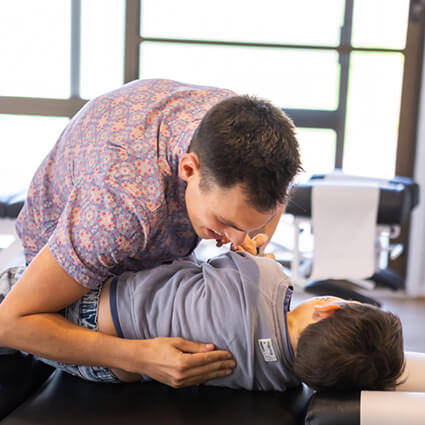
Good movement through the rib cage and thoracic spine, the upper back, plays a role in how the body holds itself. When this area is restricted, posture may commonly shift forward over time in both children and adults. Better movement through the thoracic spine and rib cage may support improved posture. And when posture improves, there may be more space for the airway to function as it should. We’re not claiming a direct link between thoracic mobility and airway circulation, but structure, posture, and breathing are important pieces of the puzzle that we look at when assessing the whole body.
